Showing posts sorted by relevance for query Agonopterix heracliana. Sort by date Show all posts

28 April 2017 - Caliban's Treat

Agonopterix heracliana with Campion bud
Clean, warm, sunlight and red campions - the quarry at Shandy Hall is starting to fill with green, and the green itself is gently tinged with pink. A surprise, midway through the afternoon, to encounter a moth.  Olivia's handy phone took the photograph and it didn't take long to identify the species.  The Common Flat Body is not an inspired name and the moth tends to be known by its scientific name Agonopterix heracliana.  There was one in the moth trap in 2014 but otherwise this apparently common moth is not seen in this garden in Coxwold.  

There are plenty of suitable plants in the quarry upon which the female could choose to lay eggs, and most of those larval food-plants are umbelliferous - Hogweed (Heracleum sphondylium), Cow Parsley (Anthriscus sylvestris), Rough Chervil (Chaerophyllum temulum), Ground Elder (Aegopodium podagraria) and the one the rabbits (or squirrels) are enjoying digging up, the delicately fronded Pignut (Conopodium majus). All are plants the caterpillars will happily munch through - and a number of others besides.


Pignut (Conopodium majus) beneath Comfrey flower

"I prithee, let me bring thee where crabs grow; and I with my long nails will dig thee pignuts" said Caliban in The Tempest. Apparently the tubers taste like chestnuts and are perfectly safe to eat.

14 March 2014 - Mistaken Identity

(Agonopterix heracliana)
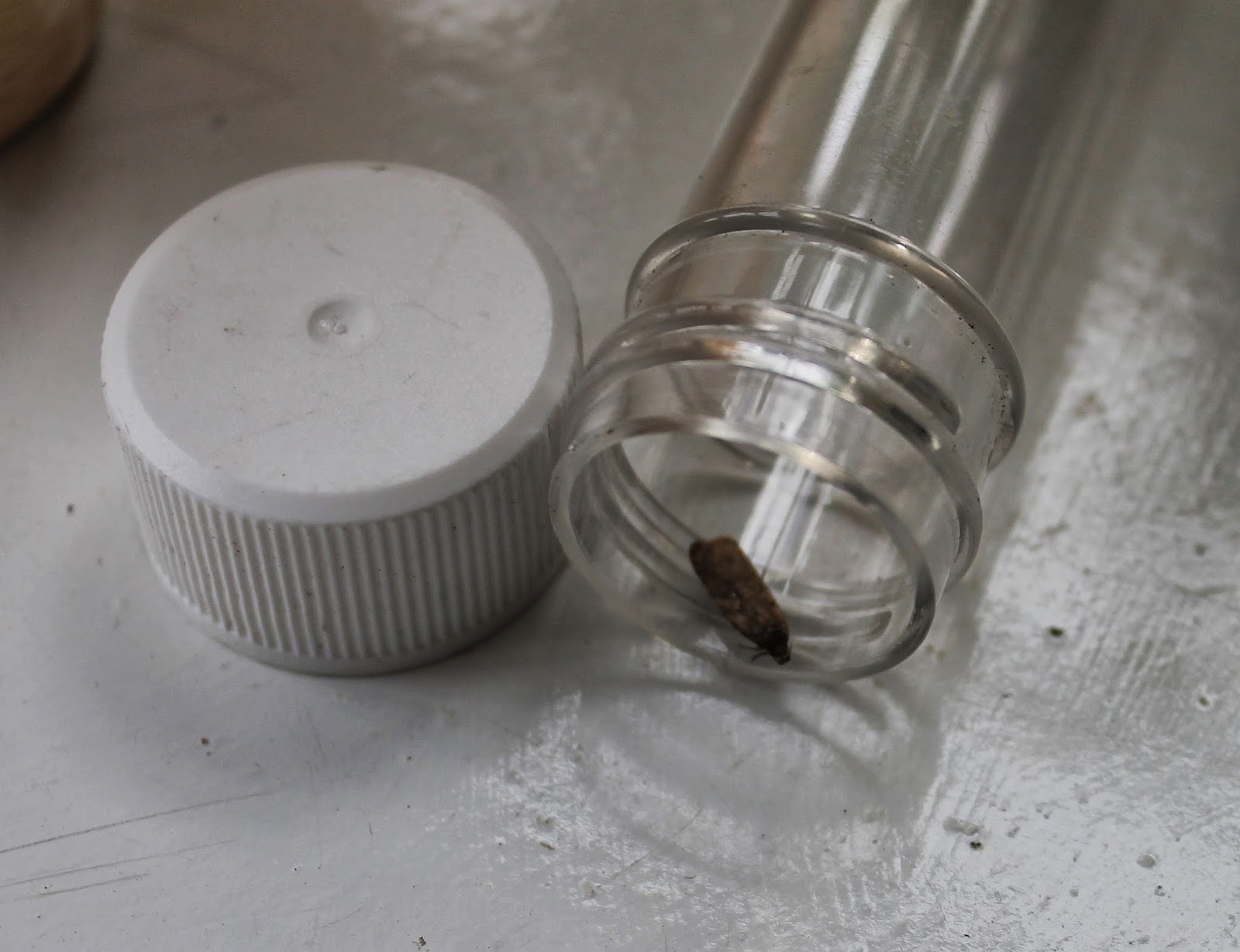
A moth 'with a wing without an angle' (Agonopterix) whose larvae feed on hogweed (Heraclieum sphondylium) seems straightforward enough but there is more to this moth than meets the eye.  It seems the specimen in the collection of the Linnean Society of London was mistakenly identified as a Parsnip Moth (Depressaria pastinacella).  For 200 years this was the case and then, when the error was discovered and (since the type specimen takes precedence over the description), the name was transferred.

Listed on the Yorkshire Moths - Flying Tonight website this little moth was doing exactly as predicted and landed on the outside of the kitchen window. Catching it in a specimen tube was easy but photographing it was not.  When not looking moribund and rather dead, as in the photographs, it can switch into high-speed and runs about with antennae twitching most actively, making it very difficult to photograph.  It was released this morning in the garden and as I followed its speedy fluttering to safety, I managed to get some wonderful photographs. Unfortunately I had left the camera card on the table.
The wing spots are visible and I am pretty sure the bar on the hind-wing distinguishes it from Agonopterix cilella.  Or at least  I am as certain as I can be.  Either way its a new species for Shandy Hall (327).

9 November 2021 - Muffled against the Cold


December Moth (Poecilocampa populi)   


A reliable arrival, as soon as the weather begins to turn, is the December Moth.  Muffled against the cold it is able to survive despite the overnight frosts of November.

The scientific name makes reference to the larva (kampe in Greek) and its appearance, which is 'varied' (poekilos); populi is the name of the food plant - the poplar tree.  The female is much larger than the male but otherwise their markings are similar.  Eggs will be laid on the trunks of trees in the garden to overwinter and then will hatch in the Spring. 

Below is Blair's Shoulder-knot (Lithophane leautieri hesperica) a moth that was first recorded on the Isle of Wight in 1951.  Since then it has spread to the north and is now common as far north as Cumbria having been recorded there in 1996 and finally Scotland in 2001.  There were six of this species sheltering under the egg cartons in the trap

Apart from a lonely looking Agonopterix heracliana (an example of which can be seen using the search facility on the blog) the sum total was rather disappointing.  The crane flies and the caddis flies have disappeared; the wasps have deserted their paper nests in the quarry garden; the apples (larger and fewer than usual) have been collected for juice and the leaves are being collected


Blair's Shoulder-knot (Lithophane leautieri hesperica)